
Your eyes do a lot of work every day, and they can also give you clues about their own health. Most changes start small, like a little more squinting or redness that lasts longer than usual.
It isn’t always easy to tell what’s normal and what isn’t. Healthy eyes generally feel comfortable and see clearly. Vision changes, lingering redness, new floaters, or light sensitivity can be signs that something needs attention. Book a routine eye exam to get a clear picture of your eye health, or reach out for emergency eye care if something changes suddenly.
What Healthy Eyes Look & Feel Like
Healthy eyes stay comfortable from morning to night. You can read a menu or a road sign without squinting, and you don’t need eye drops every hour to get through the workday. The whites of your eyes should look clear and bright.
Mild dryness or a little watering happens to everyone, especially after hours on a screen or a windy day outside. It usually settles down within a few minutes. If a symptom lasts more than a day or 2, give your optometrist a call.
Vision Changes Worth Noting
Some vision changes need attention the same day. Call your optometrist right away if you notice any of these:
- Blurry or distorted vision that comes on suddenly
- Straight lines that look wavy or bent
- A sudden increase in floaters
- Flashes of light, especially in your side vision
- A dark shadow or curtain over part of your vision
A few floaters drifting across your vision are common and usually harmless. A sudden surge, especially with flashes or a shadow, can be a sign of a retinal tear or detachment, which needs treatment right away.
Slower changes are easier to ignore. Trouble seeing at night and glare around headlights can be early signs of cataracts, which usually develop gradually as you get older.
Physical Signs on and Around the Eye
Your eyes can also show that something’s wrong through how they look and feel. Book an exam if any of these last more than 1 or 2 days:
- Redness that doesn’t clear up
- Swelling in or around your eyelids
- A gritty, burning, or itchy feeling
- Light sensitivity that makes it hard to keep your eyes open outdoors
That gritty, burning feeling is common with dry eye, which your optometrist can often help manage once they find the cause.
Frequent headaches around or behind your eyes can come from uncorrected refractive errors, like nearsightedness or astigmatism. Long hours on a phone or computer can lead to digital eye strain, which often brings on headaches too.
What Your Eyes Reveal About Your Overall Health
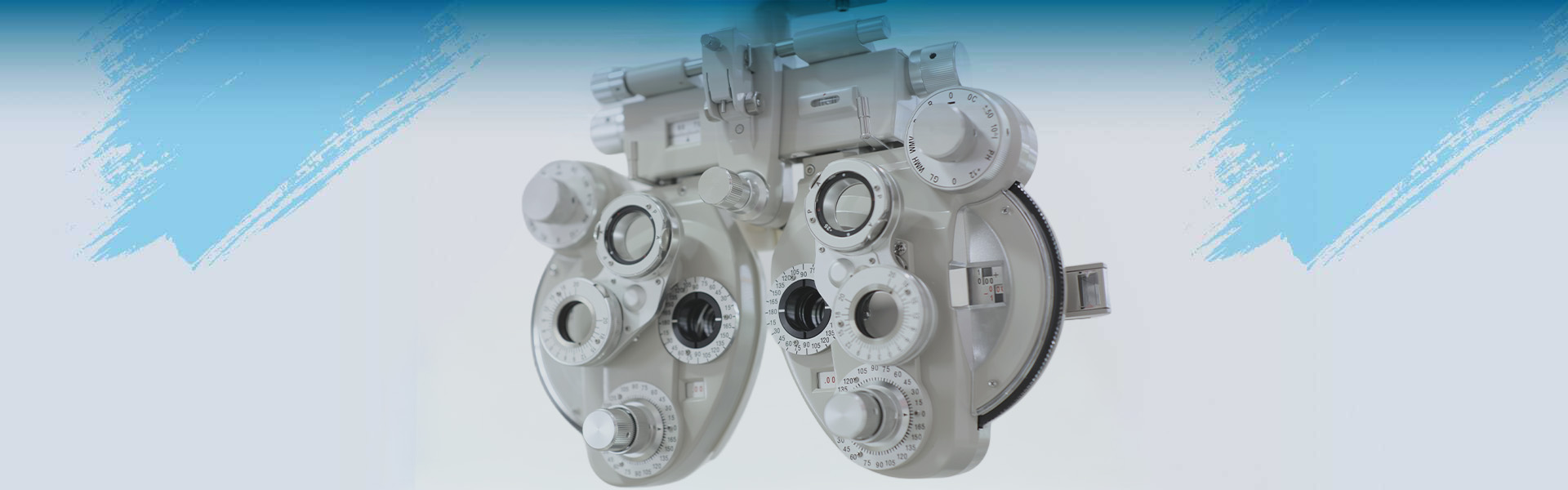
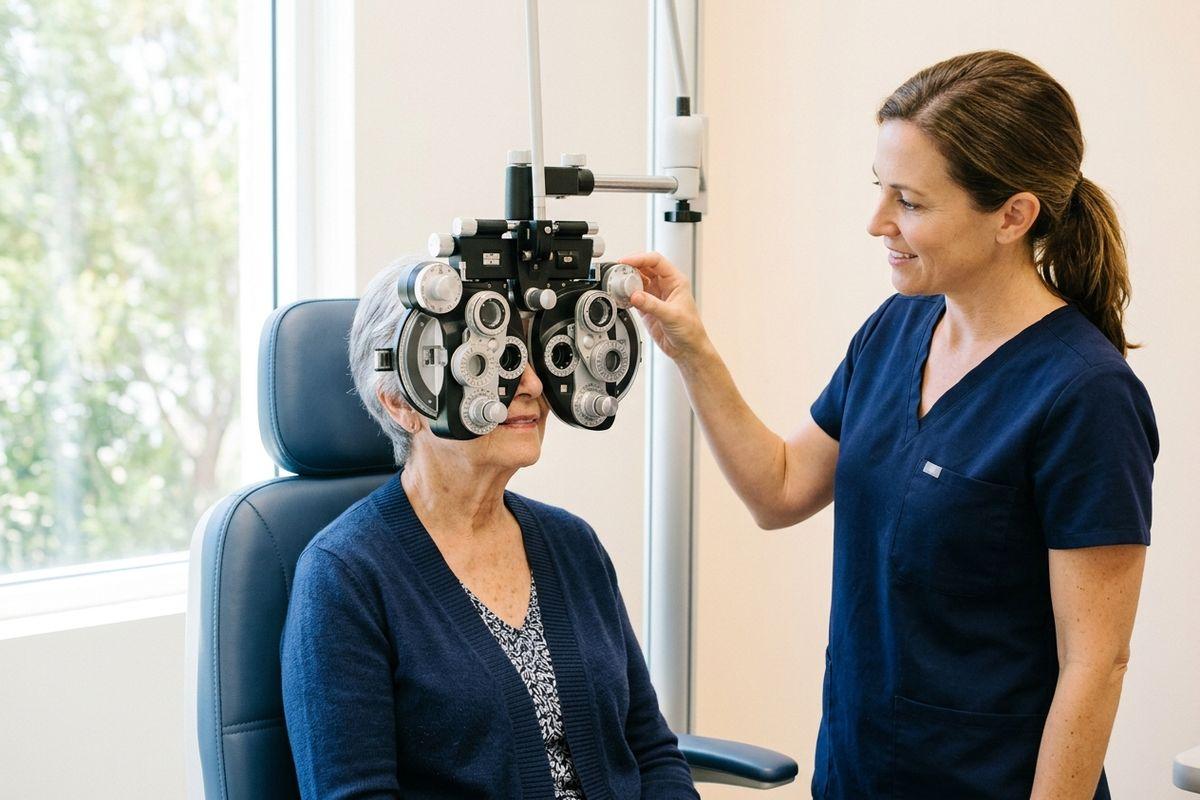
This is one of the most underappreciated parts of eye care. A vision screening at school or the DMV mostly checks how well you can read letters across the room. A comprehensive exam checks the health of your whole eye, including eye pressure, side vision, the optic nerve, and the retina.
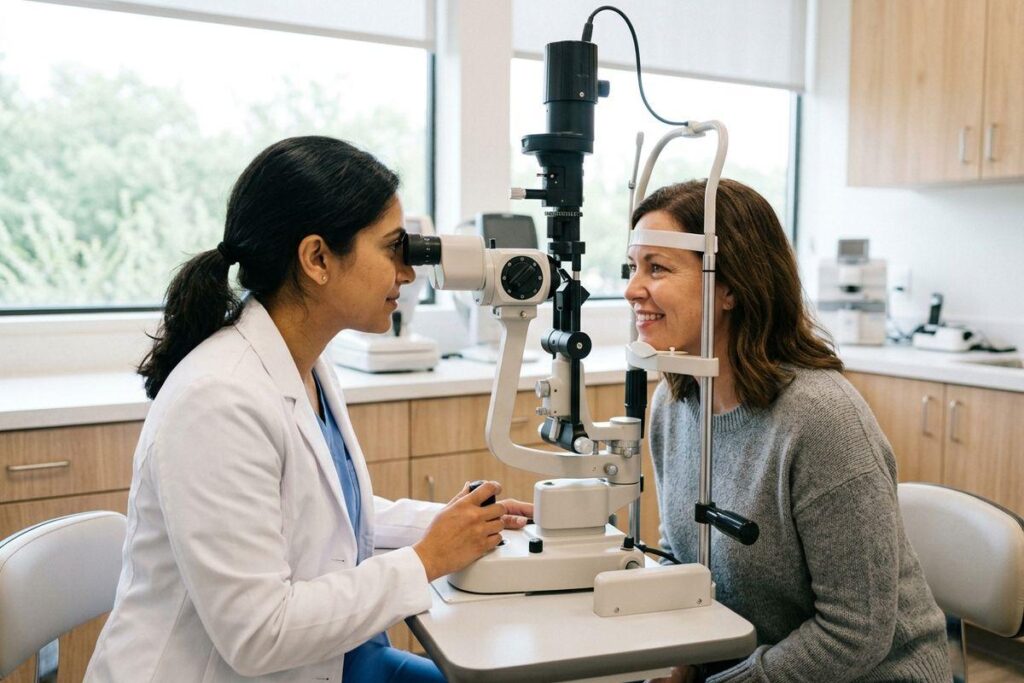
During a dilated eye exam, drops widen your pupils so your optometrist can clearly see the blood vessels and nerves at the back of your eye. Changes there can point to conditions like diabetes and high blood pressure, sometimes before you’ve noticed any other symptoms.
Comprehensive eye exams can help detect over 270 health conditions. If your optometrist spots something that goes beyond your eyes, they’ll explain what they found and may suggest a follow-up with your primary care doctor.
Who Has a Higher Risk of Eye Problems
Certain health and family factors can raise your odds of developing eye disease. Your risk can go up if you:
- Have a parent or sibling with glaucoma or macular degeneration
- Have diabetes
- Have high blood pressure
- Are over 40
Many of these conditions develop slowly and without pain. Early glaucoma often has no symptoms at all, so regular exams give your optometrist the chance to find it before you notice any vision loss.
If you have diabetes, diabetic eye exams can help track changes to the blood vessels in your retina over time.
How Often Should You Get an Eye Exam?
The right exam schedule depends on your age and health. Here’s a general guide for how often to book an eye exam:
- Babies: Once between 6 and 12 months old
- Kids 3 to 5: At least once
- Kids 6 to 17: Before first grade, then every year
- Adults 18 to 64: At least every 2 years
- Adults 65 and older: Every year
If you have diabetes or a family history of eye disease, your optometrist may recommend coming in every year.
Kids rarely complain about their vision because they don’t know what clear sight is supposed to look like. Conditions like amblyopia, or lazy eye, can go unnoticed for a long time, so keep children’s eye exams on a regular schedule.
Stay Ahead of Changes in Your Eye Health
Many eye conditions develop without obvious symptoms, and finding them early can give you more treatment options. Pay attention to new symptoms, and keep up with your exams even when your eyes feel fine.
At Total Vision Rancho Santa Margarita, we care for the whole family, from toddlers to grandparents. We’ll take time to walk you through what we see and answer your questions along the way. Book an appointment if you’re due for an exam or if something about your eyes feels off.