
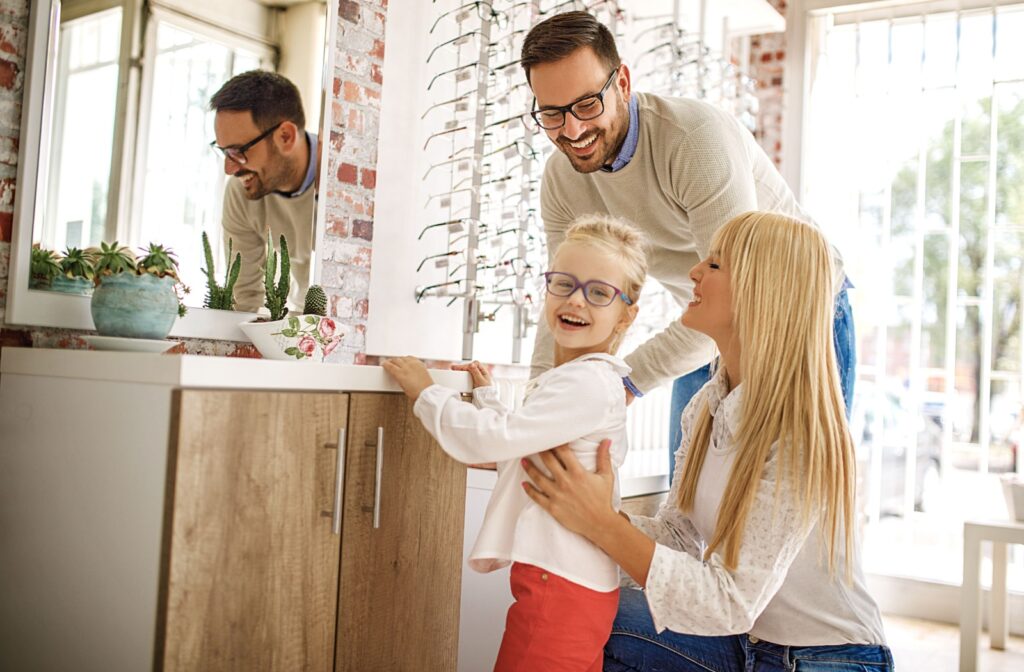
You may notice your child inching closer to the television or squinting to read a sign across the street. If you wore glasses as a kid, you might wonder if their vision is following the same path as yours. It’s a common question families bring to the team at Total Vision Rancho Santa Margarita as they navigate their children’s health and development.
While many factors contribute to vision, the simple answer is that genetics does play a part. Nearsightedness often runs in families, but your family’s history is not the only piece of the puzzle. Your daily habits and environment also significantly influence eye health, which is why there are effective approaches to myopia control in children.
What Is Nearsightedness & How Does It Affect Vision?
A Simple Look at Myopia
Nearsightedness has a medical name—myopia. It’s a common condition that affects how you see distant objects. With myopia, your vision is clear for close objects, but distant objects appear fuzzy. This happens because the eye’s shape causes light to focus in front of the retina instead of directly on it. It’s also helpful to understand the distinctions between different conditions, such as myopia vs. astigmatism.
Common Signs to Watch For
You might notice a few signs in yourself or your child that suggest a vision check is a good idea. Keep an eye out for these common indicators:
- Frequent squinting to see clearly
- Headaches from eyestrain
- Sitting very close to screens or holding books near the face
The Connection Between Genes & Eyesight
Your family’s health history can offer clues about your own, as many genetic eye disorders have a hereditary component. Nearsightedness often has a genetic link, meaning it can be passed down through generations. If one parent is nearsighted, a child’s chance of developing the condition increases. That chance becomes even higher when both parents are nearsighted, contributing to what is now a growing global health concern.
Lifestyle Factors That Influence Vision
The Impact of Screen Time & Close Work
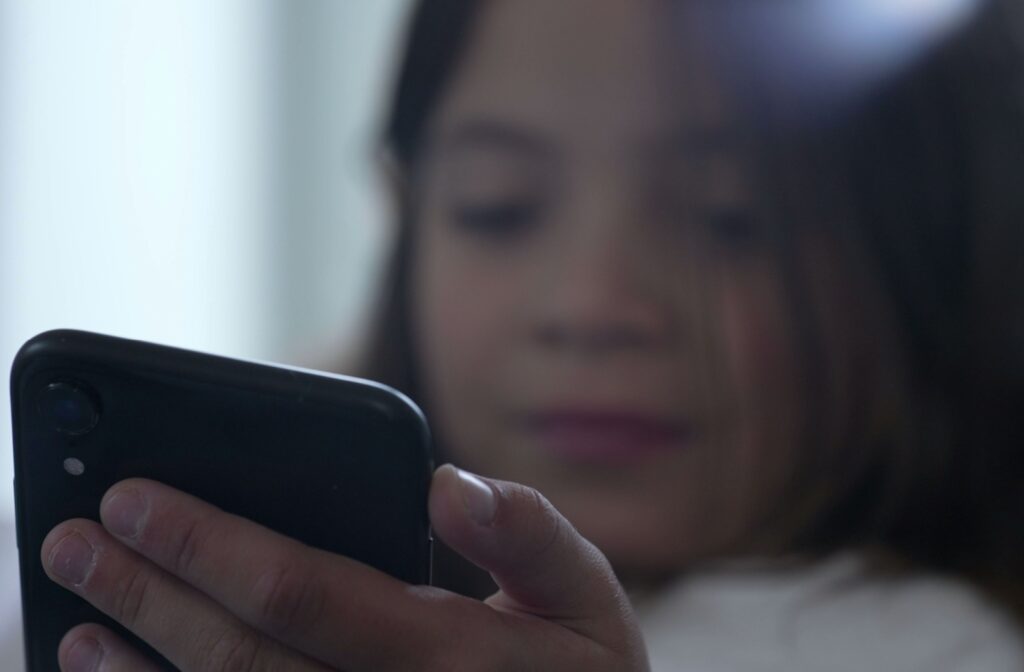
Your daily activities can also affect your eyesight. Long periods spent on tasks that require intense close focus—like reading, writing, or using digital devices—can lead to digital eye strain. For children, whose eyes are still developing, this kind of consistent close work may influence how their vision changes over time.
Why Outdoor Time Matters
Balancing indoor activities with time spent outdoors can be very helpful for your eyes, as exposure to bright light may reduce myopia risk in children. When you’re outdoors, your eyes naturally focus on objects at various distances, from nearby trees to distant clouds. The change of focus gives your eyes a much-needed break from constant close-up work.
Identify Nearsightedness in Your Family
Myopia usually develops during childhood and the teenage years, a critical time for healthy vision development when a child’s body is growing quickly. You might hear about it from a teacher who notices your child struggling to see the board at school. A comprehensive exam with an eye doctor can help provide a clear understanding of your family’s vision needs.
Proactive Steps for Your Family’s Eye Health
You can take simple, proactive steps to support your family’s vision. Scheduling regular eye exams for children helps monitor eye health and detect early changes. If nearsightedness is identified, your doctor can discuss different approaches to manage it. Finally, encouraging a healthy balance between screen time and outdoor play is a great habit for everyone.
Understanding the factors that contribute to nearsightedness helps you make informed choices for your family. By scheduling regular check-ups, you can stay on top of everyone’s vision needs. The team at Total Vision Rancho Santa Margarita is ready to help your family see a clear and healthy future.